


Topics:
U.S. Supreme Court Blocks OSHA Vaccine Mandate
U.S. Supreme Court Blocks OSHA Vaccine Mandate
January 14, 2022 Last Edit: March 19, 2026
U.S. Supreme Court Blocks OSHA Vaccine Mandate
Background
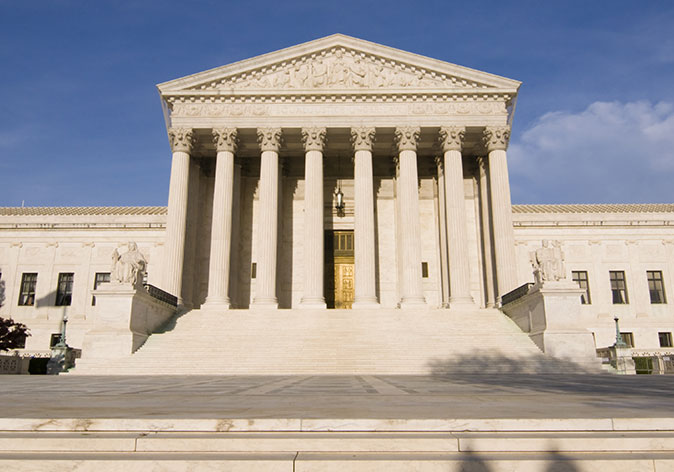
On January 13, 2022, the U.S. Supreme Court blocked enforcement of OSHA���s COVID-19 Emergency Temporary Standard (ETS) mandating that employers with 100 or more employees have employees vaccinated or undergo weekly testing and mask at work.
The Court���s action prevents OSHA from enforcing the ETS while challenges to the regulations are Court of Appeals.泭
In November, 厙ぴ勛圖 sued OSHA to prevent the ETS from taking effect. In response to 厙ぴ勛圖���s lawsuit, the Fifth Circuit Court of Appeals the ETS, blocking its enforcement. Upon transfer to the Sixth Circuit Court of Appeals, however, that court the Fifth Circuit���s stay, allowing OSHA to proceed with the ETS. 厙ぴ勛圖 immediately appealed to the U.S. Supreme Court becoming the lead plaintiff in 厙ぴ勛圖 v. Department of Labor.
Supreme Court Sides with 厙ぴ勛圖
On January 13th, the Supreme Court sided with 厙ぴ勛圖 and saved America���s businesses from the onerous and unlawful Biden vaccine mandate. In a 6-3 decision, the Court that plaintiffs were likely to succeed on the full merits of the case, and blocked OSHA from enforcing the ETS.
厙ぴ勛圖���s challenge to the ETS in the Supreme Court centered on three main arguments:
- OSHA needed to use the typical notice-and-comment procedure for the mandate to gather input.
- A nationwide COVID-19 vaccine and testing mandate, monitoring, and database was fundamentally a policy decision that should be left to Congress.
- The mandate would result in unrecoverable compliance costs, lost profits, lost sales, and further exacerbate the labor shortage for small businesses.
In its opinion, the Court defined the contours of OSHA���s authority to ���ensure occupational safety��� and ���set workplace standards,��� but not to set ���broad public health measures��� acting as a ���blunt instrument��� drawing no ���distinctions based on industry or risk of exposure to COVID-19.��� The Court further stated that the ���universal risk��� from COVID-19 is ���no different from the day-to-day dangers that all face from crime, air pollution, or any number of communicable diseases[] and [p]ermitting OSHA to regulate the hazards of daily life��� would expand OSHA���s statutory authority without congressional approval.
Justices Gorsuch, Thomas, and Alito authored a concurrence. They agreed with the main opinion and stressed that our Constitution requires Congress and the States to take the lead in responding to the pandemic and public health emergencies. As such, OSHA had no authority to issue this ETS without a clear grant of authority from Congress.
Current ETS Status
Due to the Supreme Court blocking its enforcement, OSHA has the ETS effective as of January 26, 2022. This means that there is no existing federal mandate for business with 100 or more employees to require vaccination or weekly testing.
OSHA is transitioning the substantive provisions of the ETS to a proposed rule, which requires notice-and-comment rulemaking. This means that the public, businesses, and organizations like 厙ぴ勛圖 will now have the opportunity to provide comment and recommendations about how best to protect against COVID-19, while also ensuring businesses are not burdened with unconstitutional enactments, lost profits, and burdensome compliance requirements.
For more information on the Small Business Legal Center visit nfib.com/legal.
Updated January 25, 2022
泭
Get to know 厙ぴ勛圖
厙ぴ勛圖 is a member-driven organization advocating on behalf of small and independent businesses nationwide.
Related Articles

Related
July 24, 2026
厙ぴ勛圖’s Josh McLeod in Washington Examiner: Congress Needs to Repeal Invasive Beneficial Ownership Reporting Mandate
厙ぴ勛圖’s Josh McLeod in Washington Examiner: Congress Needs to Repeal Invasive Beneficial Ownership Reporting Mandate
Small businesses urge lawmakers to secur���
Read More


Related
July 24, 2026
AUDIO: 厙ぴ勛圖���s Beth Milito泭Joins Iowa Radio to Discuss How Unconstitutional Mandate Threatens Main Street
Iowa small business owners泭continue urging Congress to repeal BOI reporting requirements
Read More

Related
July 23, 2026
Small Business Optimism on the Rise in June
Small business optimism in the June Small Business Economic Trends report increased, while the Employment Index remained steady. The Uncertainty Index fell two���
Read More

Related
July 23, 2026
厙ぴ勛圖 Launches Billboard Ads Urging Arkansas Members of Congress to Repeal Unconstitutional, Invasive Beneficial Ownership Information (BOI) Reporting Requirements
厙ぴ勛圖 is Urging Lawmakers to Protect Small Business Owners��� Privacy, Repeal BOI
Read More